
An Interview with Director Steve Martino
If you're looking for something to watch with the entire family this Christmas season, look no further than Dr. Seuss's Horton Hears a Who!, the newly released 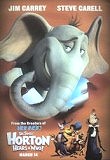 DVD featuring the voice talents of Jim Carrey, Steve Carell, Carol Burnett, and others. Andrew McDiarmid talks with co-director Steve Martino about the experience of bringing another Seuss classic to the screen, why it takes more than three years to make 86 minutes of film, and what we can all learn from an elephant named Horton.
Andrew McDiarmid (AM): How did you get involved in the Horton Hears a Who! project?
Steve Martino (SM): Well, I came to Blue Sky Studios about seven years ago as the art director on the movie Robots. Through the process of working on that movie, Chris Meledandri, head of the animation division at 20th Century Fox, saw certain skills that I had, along with Jimmy Hayward, who I directed the Horton project with. He saw that the two of us had complementary skills and he brought us together to work on Horton. We met with Audrey Geisel (widow of Theodore Geisel / Dr. Seuss) to discuss how we would approach the project and it just took off from there.
AM: So, Robots was a production with the same team and studios.
SM: Yes. Blue Sky Studios produces the Ice Age movies, along with Robots and now Horton Hears a Who!. I worked with almost the same crew on Horton as we had on Robots.
AM: USA Today calls the Horton movie "funny" and "brilliant." It's not very often that a digitally-animated movie is both technically superior and hilarious. Horton manages both. Why do you think this is?
SM: Gosh! I think from my perspective, it is the artists we bring into the project that allow us to achieve what we end up putting on the screen. At the very beginning as we were casting this movie, Jimmy and I wanted to work with top comedic actors, and I think we got three generations of the best of the best, from Carol Burnett to Jim Carrey and Steve Carell, all the way down to Jonah Hill and Seth Rogen who have just come into their own recently. So, you surround yourself with funny people who can take a moment and make it even better! Our job is to keep everyone moving in the right direction in the storytelling. The artists at Blue Sky never cease to amaze me in their ability to set a high standard for themselves and then leap over it in the throes of production. So, my answer, really, involves all the individuals who helped to make the movie funny and technically strong.
AM: When you're dealing with actors who are such masters at improvisation, which comes first, the dialogue or the animation?
SM: In our process, we construct a version of the movie in story reels, which means it's all pencil drawings. We generate lots of ideas and then we put them together on film. We do scratch voices and this gives us a foundation for what we need to accomplish in the storytelling—the basic through-lines and character arcs. With that fully understood, we get into the studio with an actor like Jim Carrey, Steve Carell, and Carol Burnett, and we talk about the individual moments. We allow them some room to add to that process, to create humor, to make a moment funnier or more poignant. Then we take their work and animate to that. When we get to this point, the movie really takes a leap in terms of the characters really coming to life!
AM: Dr. Seuss was a master at combining fantastic plots, characters, and settings with important themes and character qualities, all in a simple, easy-to-understand, enjoyable format. How does Horton capture the spirit of Dr. Seuss and what character qualities are illustrated in this story?
SM: One of the things I learned just going into the history was quite interesting. Jimmy and I went to the archives in San Diego and held with white gloves the original artwork and manuscripts from the book. What we realized in doing that research is that the writing's a process. He spent a year writing Horton Hears a Who!, working over every aspect of the storytelling, the verse, and the illustrations. We believed in the story, and it was a great one for film, with a strong beginning, middle, and end. Not all of his stories are structured in that fashion. What he does so wonderfully is give us these odd-looking creatures and characters in funny-looking settings and combines it all with a wonderful theme: a person's a person no matter how small. In doing the research, we found out that, during World War II, Dr. Seuss did a lot of editorial cartooning and he painted the Japanese with a very broad brush, I think, like many Americans viewed the Japanese during the war. Ten years later, he traveled to Japan, and the book is dedicated to a professor he met there. This book was him coming to grips with the fact that he was wrong in painting an entire society with such a broad brush, that an individual is an individual, that we need to look at the qualities of an individual before passing judgment. Horton hears that little voice from the speck and he doesn't question whether that someone looks like him or sounds like him. He realizes that they're in need of help and he is steadfast in his belief in them. This is another great theme. He stood up for what he believed in, even to the point of physical harm. There are many layers of wonderful themes in the book and we wanted to shed a light on that.
AM: That's a very interesting history! The movie has some great things to say about faith. Kangaroo asserts that if she can't see, hear, or feel something, it just doesn't exist!
SM: When we constructed the kangaroo's character and belief structure, we said she's a literalist—it's all about what she can put her fingers on and touch. That's in direct contrast to Horton—he believes! He has no physical evidence for what he believes. It shows his steadfastness and his ability to stand up for that belief.
AM: Some animated movies these days earn a PG rating for suggestive humor and other adult-oriented material. How important is it to be making rated G movies that truly everyone can watch and enjoy?
SM: It's interesting. It's a G-rated story. That's where it belongs. When we constructed the movie, we started out with the belief that we're going to tell the story of the book. Also, because of the length of the book, we wanted to show some of the activity between the pages and get to know the characters better. It's not until the end of the process that someone comes in and rates your movie. We had no idea how it would be rated. I think what happens, though, is that when you are true to the spirit of the book, it clearly lands in a G rating. There are those on the marketing side that would say we might get an older audience with a PG rating. But this is where it belongs, and everyone from the head of the studio down to Audrey Geisel herself, agreed. Heading into the holidays, I'm very happy to have a film that I can put on and know that grandparents all the way down to young nieces and nephews can enjoy the experience. There's no risk of being uncomfortable that it may not be appropriate for someone younger or that it's too kiddy for an adult. As we made the movie, we put a lot of material in there that made us laugh. We worked on the picture for three years, so hopefully there are things there that resonate with all ages.
AM: Can you describe the experience of working with Jimmy Hayward as a directing team?
SM: Jimmy had worked at Pixar for many years as an animator in the story department. He and I partnered on Robots on some sequences. I was the art director on Robots, so I had a long background in computer animation, including designing characters and worlds and effects. Jimmy and I were always together on that film. With Horton, we would divide and conquer. At times, we had over three hundred people working on the film, so we would split the responsibilities of overseeing all that.
AM: Is it common to have more than one director on an animated film?
SM: In the animation industry, it is very common. The process involves so many people working on independent tasks. The major role we play in that is setting a guide and monitoring the processes. If it were one person doing all of this, the days would be very long, trying to deal with everything! Jimmy and I, from the very first discussions we had about the story, were on the same page on how we wanted to bring things together, so it worked very well.
AM: What was the most challenging thing about bringing Horton Hears a Who! to the big screen?
SM: I think one of the most challenging things for me was the very first meeting we had with Audrey Geisel. We made a promise to her to uphold the work that her late husband had done. It was a challenge we wanted to take because we believed in the work. It was a constant challenge as we moved through the production. We asked ourselves, "are we being true to Dr. Seuss's work?" People love Dr. Seuss. They've grown up with these books and have strong attachments and experiences reading these books. We wanted to deliver something that didn't tarnish that for the audience. That was the greatest challenge. On the other hand, the greatest satisfaction was sitting in a theater with Audrey Geisel before the movie was released in theaters. I was sitting there with my hands clenched on the arms of my chair. As the movie faded to black, I wondered what she would say about the picture. She stood up and applauded, saying "That's pathos. That's real heart. You've taken the story and lifted it to a new place."
AM: What's one of your favorite Horton scenes and why?
SM: I love when Horton confronts Kangaroo for the very first time. He's telling her that he thinks he hears a voice on the speck. She says there can't be real people on that speck. He goes off into this soliloquy, saying "No, imagine! What if our world were this small&ellips;" It was a really fun moment. I think Jim Carrey brought it to life very well. Another favorite scene is when Steve Carell as mayor of Whoville is trying to explain to his wife, "Do you ever get that feeling that you're being watched by a giant elephant in the sky?" How do you communicate that to someone?! Even someone you love! So, those were two of my favorite moments in the film.
AM: If there was one thing you'd like every child in America to take from watching Horton Hears a Who!, what would it be?
SM: Be true to yourself. Stand up for the things you believe in. Be faithful.
AM: So, what's next for you? Does doing this movie open up the possibility of other Dr. Seuss adaptations?
SM: The experience of making a movie is a lot like riding a rollercoaster. I find myself back in line to ride the next one! So I'm working at Blue Sky and working in development. I've got two or three projects that I'm very interested in right now, so we're working with writers in doing all that work we did three and a half years ago for Horton where we begin to form the foundation of what, hopefully, will be a film in three, four, or five years from now that you and I can talk about!
AM: Mr. Martino, thanks so much for making quality movies like Horton Hears a Who! for the whole family to enjoy.
SM: You bet
Info about Horton Hears a Who!
- Release Date: Friday, March 14, 2008
- MPAA Rating: G
- Rating Reason: Not Available
- Genre: Animation, Family
- Starring: Jim Carrey, Steve Carell, Carol Burnett, Seth Rogen, Will Arnett, Isla Fisher, Dan Fogler, Amy Poehler, Dane Cook, Jaime Pressly, Jonah Hill
- Written By: Cinco Paul, Ken Daurio
- Director: Jimmy Hayward, Steve Martino
- Official Site: Horton Hears a Who! Website
- Synopsis: The film is based on the beloved book, first published in 1954, by Ted Geisel, who wrote under the pen name Dr. Seuss. "Horton Hears a Who" is about an imaginative elephant who hears a cry for help coming from a tiny speck of dust floating through the air. Suspecting there may be life on that speck and despite a surrounding community which thinks he has lost his mind, Horton is determined to help.